
If you come to Mendoza to visit wineries, mountains and valleys at your own pace, the easiest way to get around is by car. The province is big, the distance from one vineyard to the next is often longer than it looks on the map, and many of the best places have no bus stop at the door. This guide brings together routes, approximate driving times and practical tips to explore Mendoza by car without rushing, whether you pick up the car in the city or at the airport.
The distances and times below are approximate, always measured from the city of Mendoza, and they can change with traffic, weather or an unplanned stop.
Why exploring Mendoza by car makes sense
Mendoza can't be seen from a single avenue. On the same trip you can have breakfast downtown, lunch among the vineyards of Luján de Cuyo and reach a mountain reservoir in the afternoon. That only works well if you have your own car.
With a car rental in Mendoza you set the schedule, stop at a viewpoint whenever the landscape calls for it and combine areas that tours usually sell separately. It is also the most comfortable option if you travel as a family, with luggage or for a road trip of several days. For a larger group, have a look at our 7-seater cars; if you travel with kids, you can add a child car seat.
Public transport reaches the main towns, but almost never the door of a winery. Tours are a good introduction, but they tie you to a fixed timetable. A car gives you that freedom back.
Before you go: what you need
To rent a car you need a valid ID or passport, your driver's license (your home-country license is accepted) and a credit card in the main driver's name. The minimum age is 18.
Every rental includes 200 km per day. If you drive to a distant destination and back in one day, or chain several areas together, work out the kilometres in advance: you can add extra-km packages (monthly rentals come with unlimited mileage). There is a table further down to help you with the math.
Additional drivers are free, with the same requirements as the main driver. On the wine route this is especially useful: one person drives and the other can taste. Breathalyzer checks are common in Mendoza; the safest choice is that whoever is behind the wheel doesn't drink at all.
In the mountains and on rural roads, mobile signal can drop. Before you set off, download the Mendoza map in Google Maps (or another app) so you can use it offline.
Our office is at Martín Zapata 355 and is open 9 am to 8 pm every day (closed on 25 December and 1 January). 24/7 pickup is available as self-service outside those hours. If you land at El Plumerillo, you can also arrange delivery at Mendoza Airport, about 11 km from downtown, 15 to 25 minutes by car depending on traffic. See how to get from El Plumerillo airport to the city center, or ask for door-to-door delivery.
What driving in Mendoza is like
Traffic drives on the right, and seat belts are required in every seat. On highways it's best to keep your low beams on, also during the day. Respect the posted speed limits: they are usually lower in the city than on the highway, and there are radar checks.
A very local detail: the acequias. These are the irrigation ditches that run alongside many streets and corners. Watch out for them when you park, turn and get out of the car, especially at night or after rain.
Fuel
Leave the city with a full tank, especially if you are heading to the mountains or the south. On the Alta Montaña route, fill up again in Uspallata before continuing to Puente del Inca: further on, gas stations are scarce. In the Uco Valley there are stations in Tupungato, Tunuyán and San Carlos, but not on rural roads. San Rafael and Malargüe have several stations.
Tolls
On the usual routes from the city —wineries, Uco Valley, San Rafael and Alta Montaña up to Puente del Inca or Aconcagua— there are usually no tolls today. On Route 7 there is a toll station at Las Cuevas, close to the border. Carry a means of payment just in case; if there is a toll, rates change.
Parking in the city
Downtown, metered parking applies during certain hours. There are also private parking lots, and in Parque General San Martín it is usually easier to leave the car and walk or go up Cerro de la Gloria. Don't block corners or acequias, and don't leave belongings in sight.
Safety tips
- On mountain roads drive slowly, never overtake on blind curves and use engine braking on long descents (low gear, without riding the brake the whole time).
- Watch out for loose animals, cyclists and cars stopped on the shoulder to take a photo.
- Weather at altitude changes fast: wind, clouds and, in winter, snow. If the day turns bad, head back early.
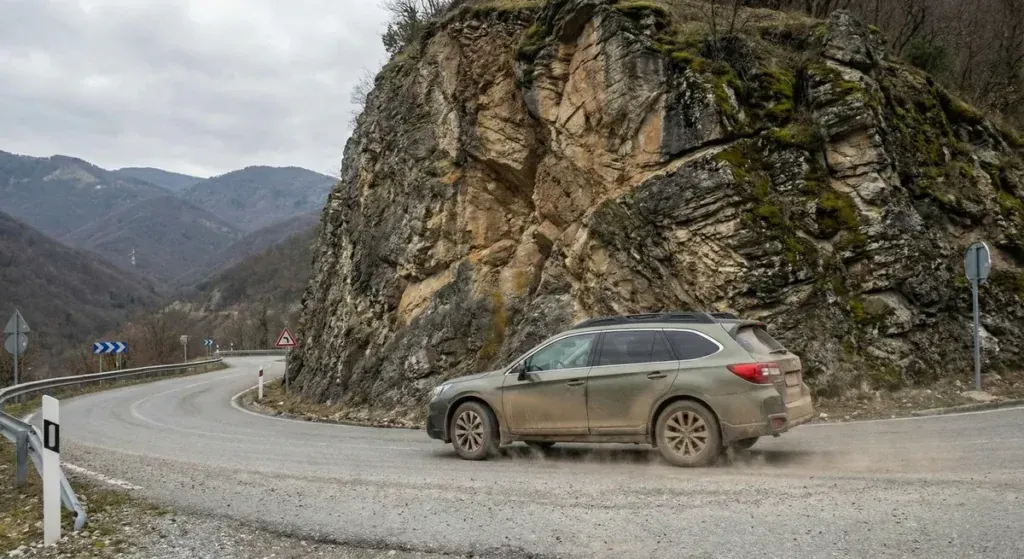
- Some roads —winery access roads, parts of the Atuel Canyon— are gravel. The rule there is simple: slow down and keep your distance.
- If something goes wrong on the road, you have roadside assistance and a towing service.
- For details on the Andes, also read our mountain driving tips.
Recommended routes, with distances and times
These are the trips most people ask for when they explore Mendoza by car. Distances are one way, approximate, from downtown.
| Destination | Approx. distance | Approx. time one way | Within 200 km/day? (round trip) |
|---|---|---|---|
| Maipú wineries | 15–20 km | 20–30 min | Yes |
| Luján de Cuyo | 20–30 km | 25–40 min | Yes, even if you change wineries |
| Cacheuta (hot springs) | ~40 km | 45–60 min | Yes |
| Villavicencio | ~50 km | ~1 h | Yes |
| Potrerillos | ~60 km | 1 h | Yes |
| Uspallata | 100–110 km | 1 h 30–2 h | Just about, depending on stops |
| Puente del Inca / Aconcagua Park | ~180–190 km | 2 h 30–3 h | No: the round trip is ~360–380 km |
| Tunuyán (Uco Valley) | ~80 km | 1 h–1 h 15 | Just about, if you don't move around much in the valley |
| San Carlos (Uco Valley) | ~105 km | 1 h 20–1 h 30 | It may go over if you visit several areas |
| San Rafael | 235–240 km | ~3 h | No: one way is already over 200 km |
| Malargüe | ~420 km | ~5 h | No |
Luján de Cuyo and Maipú: the closest wine route
Less than an hour from downtown you'll find two of the most traditional wine areas. Maipú is very close; Luján de Cuyo is a little further southwest, with vineyards at the foot of the Andes. It's the ideal plan for your first day: two or three wineries (book ahead), lunch among the vines and back to the city. Decide in advance who's driving.
Uco Valley: Tupungato, Tunuyán and San Carlos
The Uco Valley lies to the south, along National Route 40. Tunuyán is about 80 km away and San Carlos about 105 km. Tupungato is the northern gateway; Tunuyán, the heart; San Carlos (Paraje Altamira, La Consulta) is the quietest area.
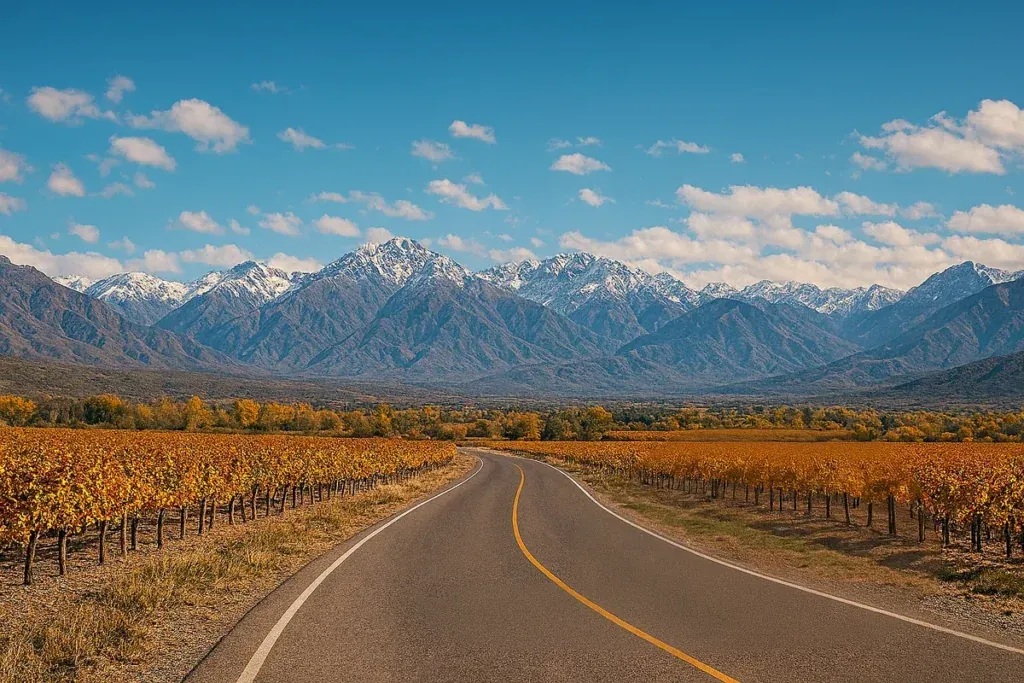
Route 40 is paved and in good condition, with a divided highway as far as Tunuyán. Wineries are reached by short access roads, sometimes gravel. Provincial Route 89, between Tupungato and Tunuyán, is one of the prettiest stretches: it runs parallel to the Andes, between vineyards and poplars. Don't miss the Manzano Histórico, in Tunuyán.
If you only have one day, pick one area (Tunuyán, for example), book two wineries and head back before dark. With more time, the best option is to spend the night in the valley. A round trip to San Carlos is already around 210 km, and driving between wineries adds up: if you sleep there, your daily mileage goes down.
Alta Montaña on Route 7: Potrerillos, Uspallata, Puente del Inca and Aconcagua
For many, this is the most spectacular day. Leave early, heading west on National Route 7.
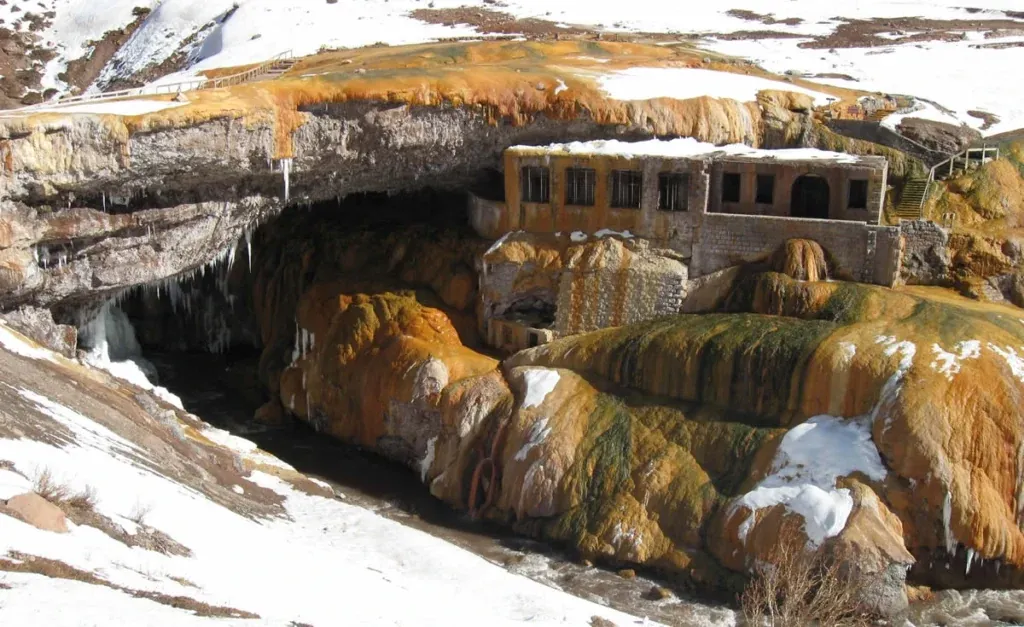
Potrerillos comes up after about an hour, with its reservoir and the first big view of the Andes. Uspallata, about 100–110 km away, is a good place for lunch and fuel. Further on you reach Puente del Inca and the viewpoint of Aconcagua Provincial Park. From Mendoza it's about 190 km: plan a full day, there and back.
You don't need a 4x4: the main road is paved. You do need to leave early and, in winter, check the road status and consider snow chains. The round trip to Aconcagua is around 380 km, so the 200 daily km are not enough and an extra package is a good idea.
Cacheuta and Villavicencio, two shorter getaways
The Cacheuta Hot Springs are about 40 km away (less than an hour): a good day to rest after a long day of driving.
Villavicencio, to the north, is another trip of about an hour, known for its nature reserve, the old hotel and the winding stretch called los Caracoles. Drive slowly and, if the road is in poor condition or turns to gravel, don't go on.

San Rafael and the Atuel Canyon
San Rafael is 235–240 km from the city, about 3 hours by road. It's best to stay at least one night rather than going there and back in a day.
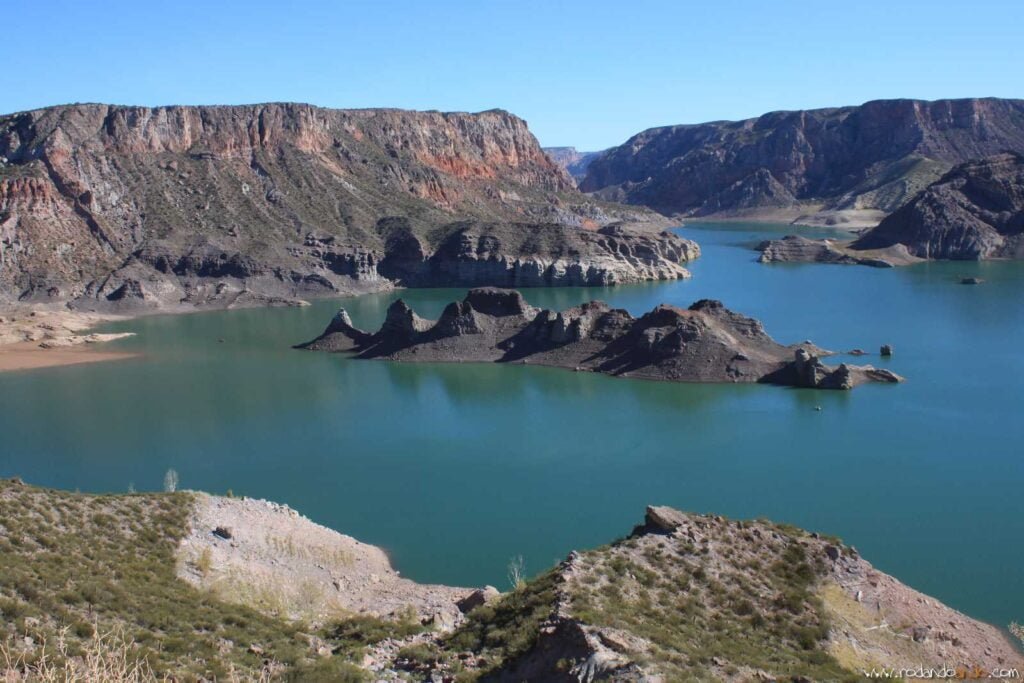
The big attraction is the Atuel Canyon, with colourful rock formations and reservoirs, a short drive from town. Part of the road is gravel: drive slowly and check conditions before you go. A regular car is fine, with care.
Malargüe and Las Leñas
If you have days to spare, Malargüe is about 420 km away, roughly 5 hours, and it's the base for volcanic landscapes (La Payunia) and, in winter, for Las Leñas, further south. These are long stretches: plan fuel, nights of accommodation and extra kilometres.
How to plan your trip: 3, 5 and 7 days
In 3 days. Day 1: the city (Plaza Independencia, Parque General San Martín, Cerro de la Gloria) and wineries in Maipú or Luján. Day 2: Alta Montaña on Route 7, there and back. Day 3: the Uco Valley as a day trip, or Cacheuta if you'd rather take it easy. You get a complete overview, with one high-mileage day (the mountain one).
In 5 days. Add a night in the Uco Valley and a calmer day at the hot springs or in Villavicencio. That way you don't rush the mountains or the valley.
In 7 days. You can link the city, wineries, Alta Montaña, the Uco Valley and San Rafael. If you also want to reach Malargüe, add two or three nights. To travel at your own pace, read how to explore Mendoza at your own pace.
A rule of thumb with the 200 daily km: nearby wineries and Cacheuta fit easily; Aconcagua, San Rafael or Malargüe don't. Look at the total for your trip and ask for extra-km packages when the route is long.
Weather, snow and chains
Spring and autumn are usually the most comfortable seasons for driving: mild days and, in autumn, red vineyards (see Mendoza in autumn). Summer brings very long, hot days; it's best to set off early. Winter shows the snow-capped Andes, with shorter days and cold at altitude: see Mendoza in winter. Not sure about dates? Read when to travel to Mendoza.
In that season, snow chains may be mandatory on Route 7 and in Alta Montaña depending on the weather. Check road conditions before you leave and, if you're heading to the mountains, rent snow chains.
If your trip continues to Chile
All cars in our fleet can cross into Chile with a rental car travel permit. The permit costs the equivalent of one rental day. For the requirements and how to request it, see the permit page and our guide to crossing into Chile by car from Mendoza.
A local car to explore Mendoza at your own pace
At MDZ Rent a Car we have been renting cars in Mendoza since 2003. Our office is at Martín Zapata 355, open 9 am to 8 pm every day, with 24/7 self-service pickup. Additional drivers are free, and our fleet includes compact cars, automatics, 7-seaters and higher-clearance options. Questions? Message us on +54 9 261 230-6787 (WhatsApp) or use our contact page. Our rental terms are public, and you can learn more about us.
If you arrive by plane, you can start at El Plumerillo Airport. For a tailor-made trip, see our personalized service.
Frequently asked questions
Can you explore Mendoza without a car?
You can, but you'll miss a good part of the province or depend on tours with fixed schedules. Wineries, the Uco Valley and Alta Montaña are far more enjoyable by car.
How many kilometres per day are included in the rental?
200 km per day are included, and you can add extra-km packages if your route is longer. A day of wineries near the city fits easily; a round trip to Aconcagua, or driving down to San Rafael, doesn't.
Can I take the rental car to Chile?
Yes. All cars can cross with a permit that costs the equivalent of one rental day.
What do I need to rent a car?
A valid ID or passport, a driver's license (foreign licenses are accepted) and a credit card in the main driver's name. The minimum age is 18.
Do I need snow chains?
In winter, on Route 7 and in Alta Montaña, they may be mandatory depending on the weather. If you travel to the Andes in that season, check the road status and rent snow chains.
Do I need a 4x4?
Not for the main routes: they are paved. A regular car is enough for wineries, the Uco Valley, Alta Montaña on Route 7 and San Rafael, as long as you drive carefully on gravel stretches.
Is the office open 24 hours?
The office is open 9 am to 8 pm every day. 24/7 pickup is available as self-service outside those hours.
Are there tolls on Mendoza's tourist routes?
On the usual routes from the city, there usually aren't any today. There may be one at Las Cuevas, close to the border, if you continue to that stretch of Route 7, and it's worth checking before you travel whether a new toll station has been added.